A stronger workforce requires more than filling openings. It requires recruiting capacity, selection discipline, bench strength, strong community leadership, and a culture where good people want to stay.
Senior living has a staffing challenge.
But I have come to believe recruiting is only part of it.
When an organization repeatedly loses caregivers, department heads and other key employees, the question cannot remain:
How do we find more people?
We also have to ask:
What are people experiencing once they get here, and have we built enough leadership capacity around them to help good people succeed and stay?
That question matters. Activated Insights reports that more than 40% of new senior living hires leave before day 100.
High early turnover may be common. That does not mean it should become normal.
Recruiting should build capacity, not simply respond to vacancies
Owning home care companies changed the way I think about recruiting.
We recruited caregivers every day.
Our ability to accept new clients and grow depended on having the workforce capacity to serve them. Recruiting was part of the daily operating rhythm, not something we turned on after the schedule was already in trouble.
We tracked recruiting KPIs aggressively. We interviewed constantly. Recruiting goals were visible. We rewarded caregivers for referring people who joined us and stayed.
We were not simply generating applicants.
We were continually building the team we would need next.
That distinction matters in senior living.
If recruiting begins after someone resigns, the organization is already reacting. Candidate choice narrows. Coverage pressure increases. And the temptation to hire whoever is available becomes much stronger.
A healthy pipeline gives leaders something incredibly valuable:
choice.
It allows a manager to interview two or three candidates and say, “I haven’t found the right person yet.”
A strong pipeline still needs a strong filter
Recruiting aggressively never meant lowering our standards.
We developed success profiles for different roles and used behavioral assessment as one piece of the selection process. We wanted to understand what success actually required in the job.
Different roles needed different strengths.
A caregiver working independently in someone’s home needed judgment, reliability, communication skill and emotional steadiness. Office roles required organization, urgency and problem solving. Leadership required another set of capabilities.
The tools never made the hiring decision.
They helped us make a better one.
I experienced the same discipline earlier in my career in financial services. We recruited until we found the right candidate. Important hires met with multiple people so the decision benefited from different perspectives and broader team buy-in.
And we developed bench strength.
Who was growing? Who could take on more? Who might be ready for the next opportunity? Who could step forward if someone left?
Those experiences shaped one of my strongest beliefs about workforce strategy:
Recruiting intensity without selection discipline creates churn. Selection discipline without recruiting intensity creates scarcity. Strong organizations need both.
Hiring urgency can quietly lower the standard
Senior living creates real pressure to fill jobs quickly.
Residents need care. Schedules have to work. Families expect consistency. Managers may already be covering gaps.
But urgency can subtly change the hiring question from:
Is this the right person?
to:
Can this person start?
Those are not the same question.
A weak hire may temporarily solve a coverage problem, but the cost moves somewhere else. A department leader spends more time coaching. Strong employees compensate. Standards become inconsistent.
And eventually the organization is recruiting again.
Hiring faster is not the same as hiring well.
There is a difference between operating lean and operating thin
This is a distinction I believe senior living should examine more closely.
A lean organization has clear priorities, strong systems, disciplined processes and enough capable people to execute.
A thin organization has too few people carrying too much.
Thin can look successful for a while.
An Executive Director fills in. A nursing leader works another day. A department head covers another gap. A strong employee quietly absorbs another responsibility.
At first, it can look like commitment.
Then it becomes exhaustion.
Then turnover.
Then inconsistency.
And eventually residents and families feel it.
The community leadership layer is particularly important. Department directors, nurses, memory care leaders, programming leaders, dining leaders, business office managers, housekeeping leaders and facilities leaders sit directly between organizational strategy and resident experience.
They are where strategy becomes execution.
Current industry research reinforces that point. In the 2026 Argentum/Activated Insights workforce study, 71.4% of respondents said feeling valued by a supervisor was extremely important to job satisfaction, while 48.2% identified a poor supervisor relationship as something that could cause them to leave the industry.
When middle leaders leave, standards can lose their carrier.
The policy remains. The process remains. The values remain.
But the person who knew how to translate them into consistent daily behavior is gone.
Corporate support should create capacity where the work happens
Home office resources can bring enormous value: clinical expertise, HR support, technology, training, sales resources and operating standards.
But I think every support structure should pass a simple test:
Does it make it easier for the community to execute?
If community leaders remain chronically stretched while substantial resources exist elsewhere in the organization, it is worth examining where capacity actually sits.
And if support arrives primarily through another meeting, initiative, request or reporting requirement, it may unintentionally consume some of the capacity it was intended to create.
This is not an argument for simply adding management positions.
It is an argument for looking carefully at workload, decision rights, backup coverage, leadership development and where organizational resources create the greatest operating leverage.
Treat employees like people you cannot afford to lose
In home care, I treated employees like clients.
Good caregivers were difficult to find and enormously valuable to keep. We could not deliver what we promised clients without them.
Employees had a voice. Management had a vote. People participated in strategy and helped develop objectives. We wanted them to understand the why, not simply the what.
Retention became noticeably stronger.
Good employees referred other good employees. Word traveled. The culture became increasingly self-reinforcing.
But treating employees well never meant tolerating poor performance.
That matters too.
A strong employee culture protects good employees from having to carry poor performance indefinitely.
When leaders avoid coaching because staffing is tight, strong employees carry the consequences.
Eventually, they may leave too.
Recognition should reinforce the culture you want
Senior living is right to celebrate caregivers.
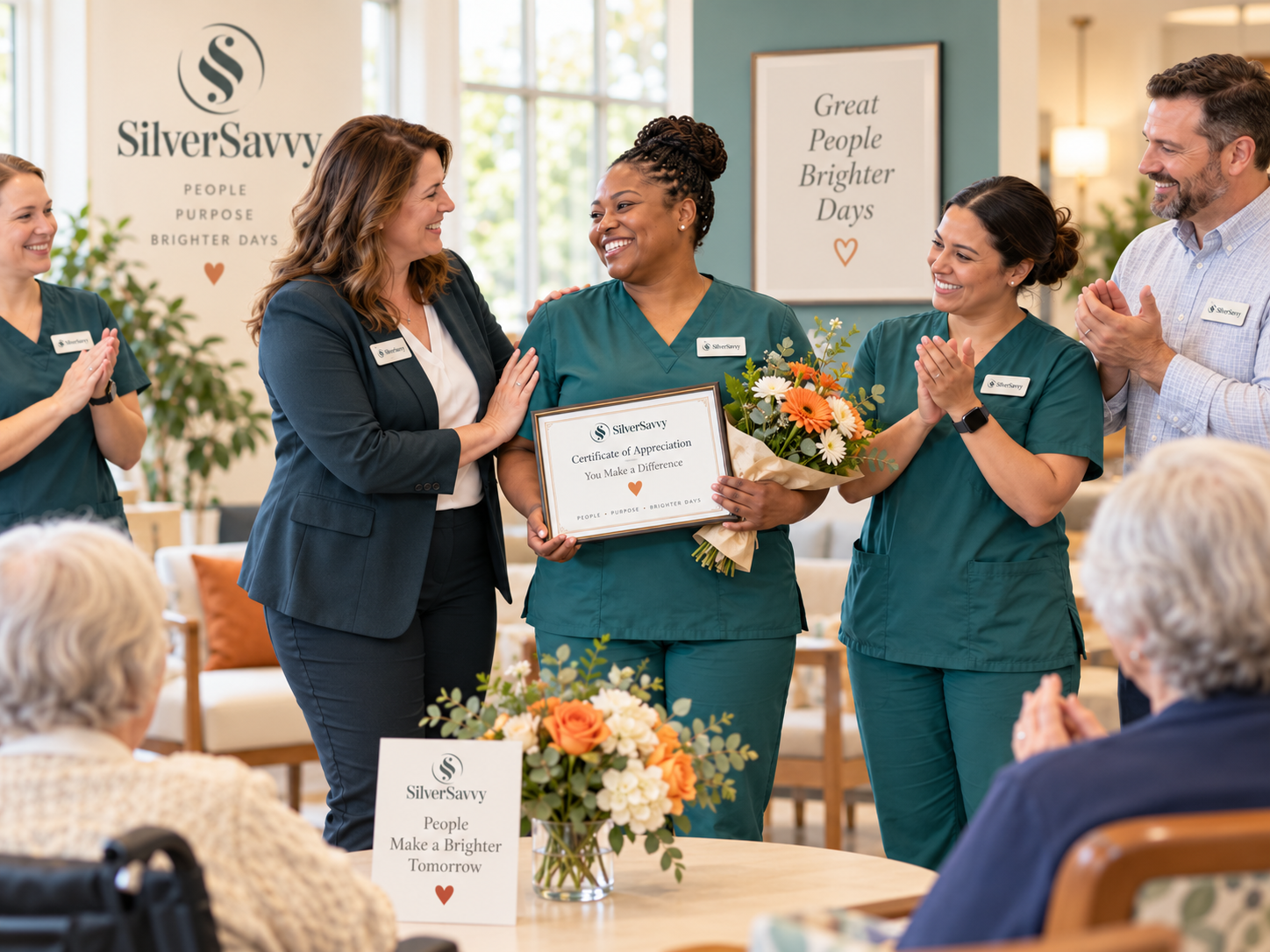
But recognition should also reach the people who create stability: the manager who develops someone, the nurse who builds backup coverage, the programming leader who rebuilds engagement, the dining manager who fixes a recurring problem, and the leader who prevents tomorrow’s crisis instead of heroically solving today’s.
Recognition is more than appreciation.
It tells people what kind of work the organization values.
Gallup and Workhuman followed nearly 3,500 employees and found that people receiving high-quality recognition were 45% less likely to have changed organizations two years later.
That makes recognition part of the retention system, not simply a feel-good program.
Early turnover should be treated as operating data
If more than 40% of new hires are leaving before day 100, the answer cannot simply be to recruit another 40%.
We should be asking why.
Was the job accurately represented? Did we select well? Was onboarding effective? Did the manager have time to support the employee? Were expectations clear? Was the workload sustainable? Did anyone check in before the resignation?
Turnover should not live only on an HR dashboard.
It is operating data.
It tells us something about selection, supervision, workload, communication, culture, or some combination of them.
Senior living needs a talent engine
Senior living absolutely needs strong recruiting.
But the larger opportunity is to build a talent engine.
Recruit continuously. Maintain selection standards. Develop bench strength before the vacancy. Invest in community-level leaders. Pay attention to the first 100 days. Give employees a meaningful voice. Make corporate resources reduce operating friction. Recognize the people who develop others and prevent problems. Address poor performance so strong employees are not asked to carry it.
A community does not become stable because every box on the organization chart is filled.
It becomes stable when the right people are hired, developed and supported, and when enough leadership capacity surrounds them to do excellent work consistently.
That is the staffing strategy I believe senior living needs now.
Recruit continuously. Select carefully. Develop constantly. Build the bench. Support the middle. Protect the culture.
Then give good people a reason to stay.
A SilverSavvy perspective
At SilverSavvy, I look at the operating environment behind the experience families ultimately receive. Workforce stability, leadership capacity and culture are inseparable from care quality, family trust and sustainable growth.
For senior living organizations examining workforce stability or community-level operating capacity, SilverSavvy brings an independent operator’s perspective to identifying where the pressure sits and where change can have the greatest impact.
Laura Lynn Morrissey
Founder, SilverSavvy
Certified Aging Specialist | Certified Dementia Practitioner
[email protected]
www.silversavvy.com